Discover Felixstowe’s Coastal History
A Coastline Through Time
Join us for a guided heritage walk along the Old Felixstowe coastline, exploring the remarkable history of the Deben estuary. From the Roman fort of Walton Castle to Anglo-Saxon kings, Napoleonic defences and the radar stations of the Second World War, this stretch of coast has been watched and defended for nearly two thousand years.
Along the way we’ll uncover the stories behind the landscape — and the history hidden just offshore.
Anniversary Heritage Walk
Good Friday 2026
7 AM and 7PM
Sunrise 6.26 Low Tide 7 am
Sunset 19.31 Low Tide 19.06
Weather Permitting – in case of rain we will postpone until the next low tide sunrise window!
Hidden Felixstowe
This timeline traces the story of Felixstowe’s coastline across two thousand years. From the Roman fort of Walton Castle guarding the Deben, to the Anglo-Saxon kingdom at Sutton Hoo, the Napoleonic Martello Towers, the development of radar at Bawdsey and the offshore sea fort of Sealand — each moment reveals how this coast has been watched, defended and travelled for centuries.
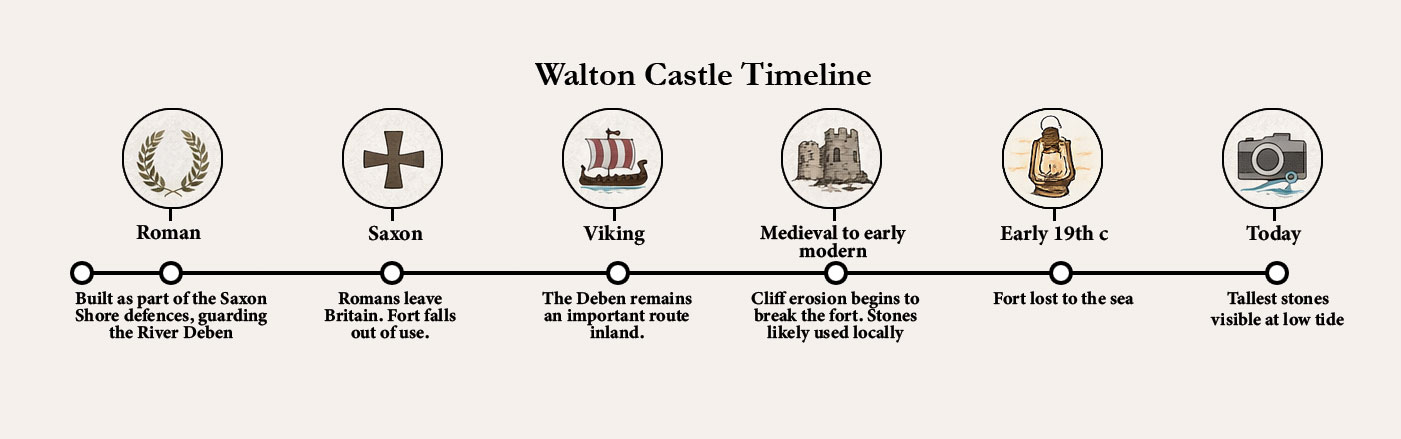
275 AD
Roman Fort at Walton Castle Built
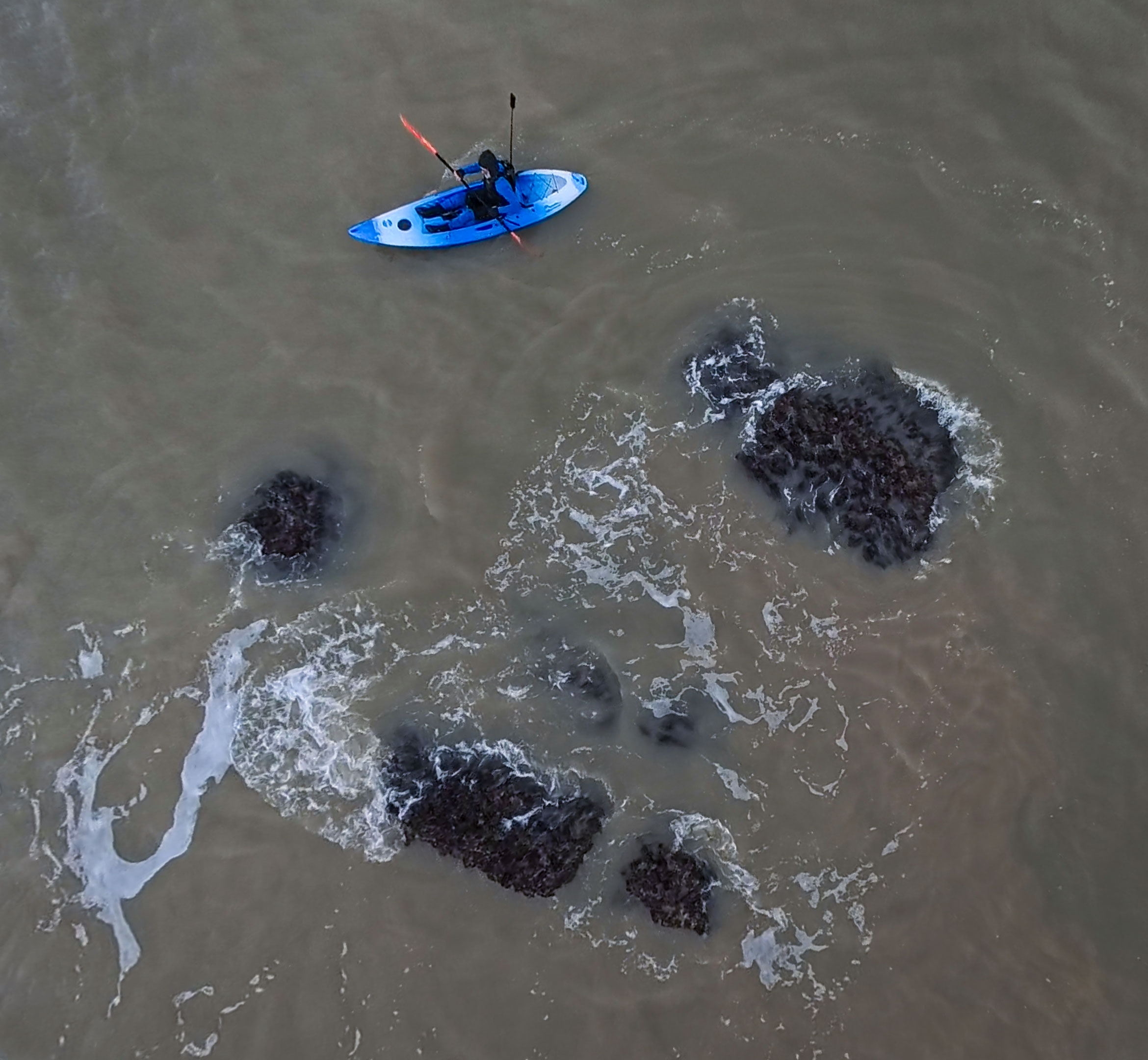
A Roman fort was constructed on the cliffs above the Deben estuary as part of the Saxon Shore defences. It guarded vital shipping routes along the east coast. Over time, coastal erosion claimed the site — and today, fragments of the fort lie scattered beneath the sea, only visible when conditions allow.
625 AD
Sutton Hoo Royal Burial
Across the Deben, a royal burial was laid to rest at Sutton Hoo. Thought to be that of King Rædwald, the ship burial revealed a world of wealth, power and far-reaching connections in early Anglo-Saxon England — reshaping our understanding of this period
1066
Norman Control of the Coast
Following the Norman Conquest, control of East Anglia became vital. The coastline, rivers and estuaries — including the Deben — were key routes for trade, movement and defence, linking this quiet stretch of Suffolk to wider national events
1805
Martello Towers Built
A chain of Martello Towers was constructed along the Suffolk coast to defend against the threat of Napoleonic invasion. Built for strength and visibility, these circular forts became a defining feature of the coastline — some still standing today.
1936
Radar Developed at Bawdsey
At Bawdsey Manor, just across the estuary, early radar experiments changed the course of modern warfare. This quiet stretch of coast became the birthplace of a technology that would prove critical in the defence of Britain during the Second World War.
1939–1945
WWII Coastal Defences
During the war, the Felixstowe coastline was heavily fortified. Anti-invasion defences, patrols and lookout points lined the shore, reflecting the continued strategic importance of this coastline in times of conflict.
1967
Sealand Declared
Just offshore stands Sealand, a former wartime sea fort repurposed as a self-declared principality. Its presence is a modern echo of this coastline’s long history of defence, adaptation and independence.